Deep Tissue Massage for Men
Deep Tissue Massage for Men: Benefits, Safety, and What to Expect
Deep tissue massage uses slow, firm pressure to work through tight muscle and connective tissue. Men often book it for workout soreness, old knots, stiff hips, or posture-related pain. A good session can help, but only when you know what it does, what it should feel like, and when to skip it.
If your shoulders stay hard as stone after a desk day, or your lower back barks after lifting, you are not alone. Many men carry stress in muscle, not mood.
That starts with understanding how this style of massage works.
What deep tissue massage does for the male body
Deep tissue work targets deeper muscle layers and the connective tissue around them. A therapist uses slow strokes and steady pressure to work through dense spots that often build after years of lifting, sitting, driving, or manual labor. The goal is to loosen stubborn tightness, not to overpower your body.
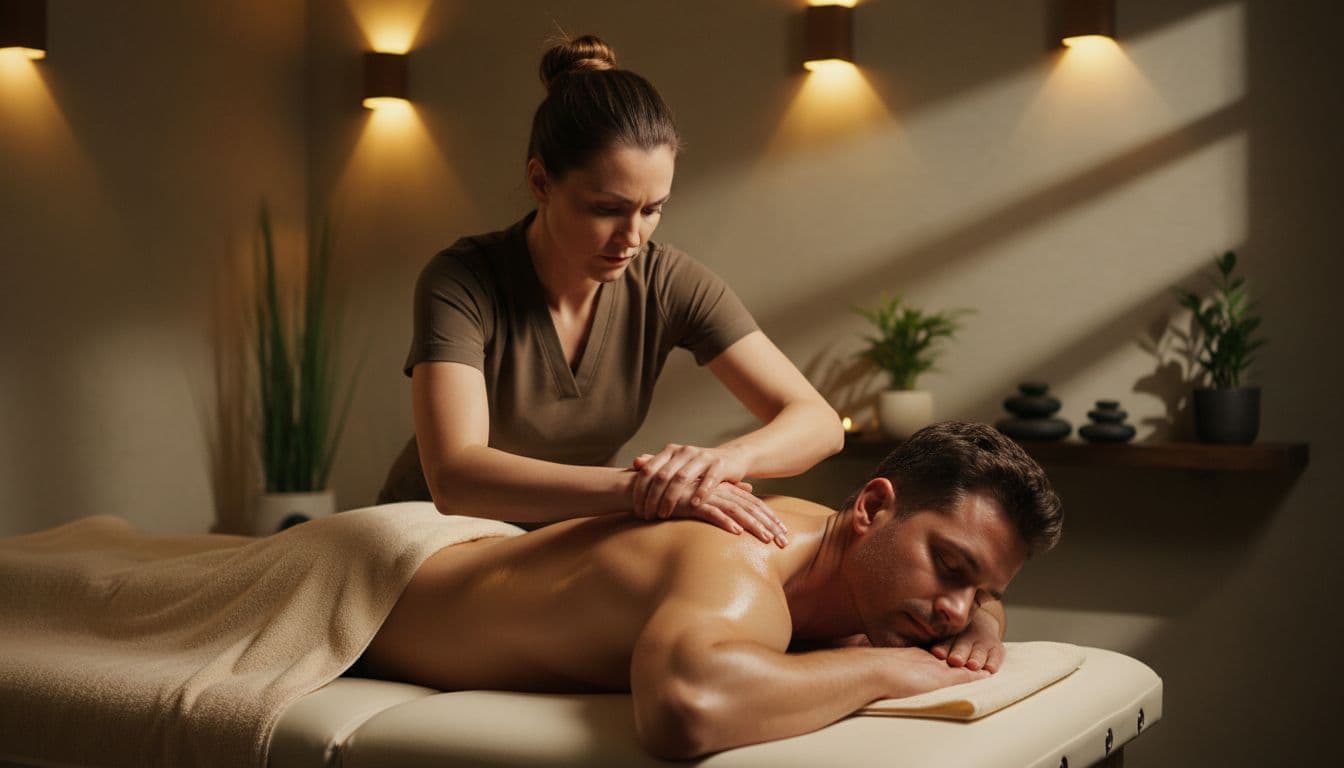
How it differs from a relaxation massage
Relaxation massage is lighter and broader. Deep tissue is slower, firmer, and more exact. It often focuses on one problem area for longer. Still, good pressure should feel useful and controlled, not like you are bracing for damage.
Where men usually hold the most tension
Men often feel the most tension in the neck, shoulders, upper back, lower back, hips, glutes, and calves. Long drives, desk work, weight training, construction jobs, cycling, and weekend sports can all load those areas the same way, day after day.
Why many men book deep tissue massage
Most men book deep tissue massage for one reason, they want their body to move and feel better. The benefits are practical, but they are not magic.
Support for muscle recovery and soreness
After hard training or repetitive work, muscles can feel heavy and stiff. Massage may ease that tightness and help you recover more comfortably. It does not replace sleep, hydration, sensible programming, or mobility work. A PubMed review on deep tissue massage and athletic recovery found support for better flexibility and perceived recovery in some groups.
Stress relief that shows up in the body
Stress often lands in the jaw, traps, and low back. When those areas stay switched on all week, sleep and focus can suffer. Firm bodywork can help some men relax because it reduces that built-up holding pattern.
Better movement for work, training, and daily life
When tight tissue eases, simple things get easier. You may bend, twist, reach overhead, sit longer, or stand taller with less effort. That matters at work, in the gym, and at home.
What to expect before, during, and after a session
For first-timers, the unknown is often the biggest barrier. A clear idea of the session makes the table feel less intimidating.
How to get ready
Drink some water, shower, and show up on time. Wear clothing that is easy to remove, and tell the therapist about injuries, surgeries, or areas that always flare up. If you want more work on one spot, say so before the session starts.
What the pressure should feel like
Deep tissue can feel intense, especially on tight shoulders or glutes. It should still stay tolerable. A therapist should adjust pressure when you speak up. Sharp pain, tingling, numbness, or the urge to pull away are signs to say something right then.
Sharp pain is a warning, not a sign of a “better” massage.
What to do afterward
Afterward, you may feel looser, sleepy, or a little sore. Water, light walking, and a warm shower often help. If your body feels tender, skip a hard workout that day. Mild soreness should fade within a day or two.
When deep tissue massage makes sense, and when to skip it
This approach fits some problems well and others poorly. Knowing the difference can save you money and keep you out of trouble.
Good times to book a session
It can make sense when you have chronic tightness, post-workout stiffness, desk-related shoulder pain, stress tension, or mild overuse discomfort. Many men also book after travel or long work weeks when hips and backs feel locked up.
Times to talk to a doctor first
Talk to a doctor first if you have a fresh injury, swelling, fever, unexplained pain, blood clot concerns, or a serious health condition. Massage is not the first move for sudden or severe pain. For a broad safety check, see WebMD’s overview of deep tissue massage.
How to pick the right therapist and get better results
A skilled therapist can make the same pressure feel far better. Results often come down to fit, training, and communication.
Questions to ask before you book
Before you book, ask about licensing, training, and how much deep tissue work they do each week. If you lift, run, or sit for 10 hours a day, ask whether they often treat those patterns. Their answer should sound clear, not vague. If you find someone good, booking around heavy training or busy work periods often helps more than waiting until pain spikes.
How to speak up during the session
During the session, say where you want more time and where the pressure feels like too much. Good feedback does not make things awkward. It helps the therapist adjust angle, speed, and depth, which usually leads to a better result and less next-day soreness.
Conclusion
Deep tissue massage can be a solid option when your body feels stuck, overworked, or tense. For many men, the biggest gains are less tightness, easier movement, and a calmer nervous system.
The best session is not the hardest one. It is the one that matches your body, your goals, and your limits. Choose a qualified therapist, be honest about pressure, and let the work be precise instead of punishing.
Visit the website at https://menswaxingspa.com and contact number (239) 590-1216.